Real estate investment is no longer about buying where crowds already exist.
It is about identifying where cities are being deliberately built for the next 20–30 years.
This is precisely why invest in Dholera Smart City has become a serious question for forward-looking investors.
Dholera Smart City is not an extension of an old city, not a speculative suburb, and not a short-term real estate trend. Understanding why invest in Dholera Smart City begins with recognizing that it is India’s first greenfield smart city, planned from scratch as a manufacturing-led economic engine.
This blog explains—clearly and systematically—why Dholera Smart City deserves serious consideration as an investment destination, and why informed investors are positioning themselves early.
Dholera Is Not a City—It Is an Economic System
Most cities grow organically.
Dholera is being engineered.
Spanning over 920+ sq. km, Dholera is designed as an integrated system where:
Industry drives employment
Employment drives migration
Migration drives housing
Infrastructure supports everything from Day One
📌 When you invest in Dholera, you are not betting on demand—you are aligning with a planned demand-creation model.
The Real Reason Dholera Exists: Fixing India’s Structural Weakness
For decades, India faced three chronic problems:
High logistics costs
Congested, inefficient cities
Manufacturing constrained by land and infrastructure
Dholera directly addresses all three.
It was conceived as part of the Delhi–Mumbai Industrial Corridor, with a clear mandate:
Reduce logistics cost
Enable large-scale manufacturing
Create globally competitive urban infrastructure
📌 Dholera was not created because land was cheap—it was created because India needed a new growth model.
Infrastructure Comes First Here—And That Changes Everything

In traditional cities:
Population arrives → Infrastructure struggles → Value erodes
In Dholera:
Infrastructure is built → Industry moves in → Population follows → Value compounds
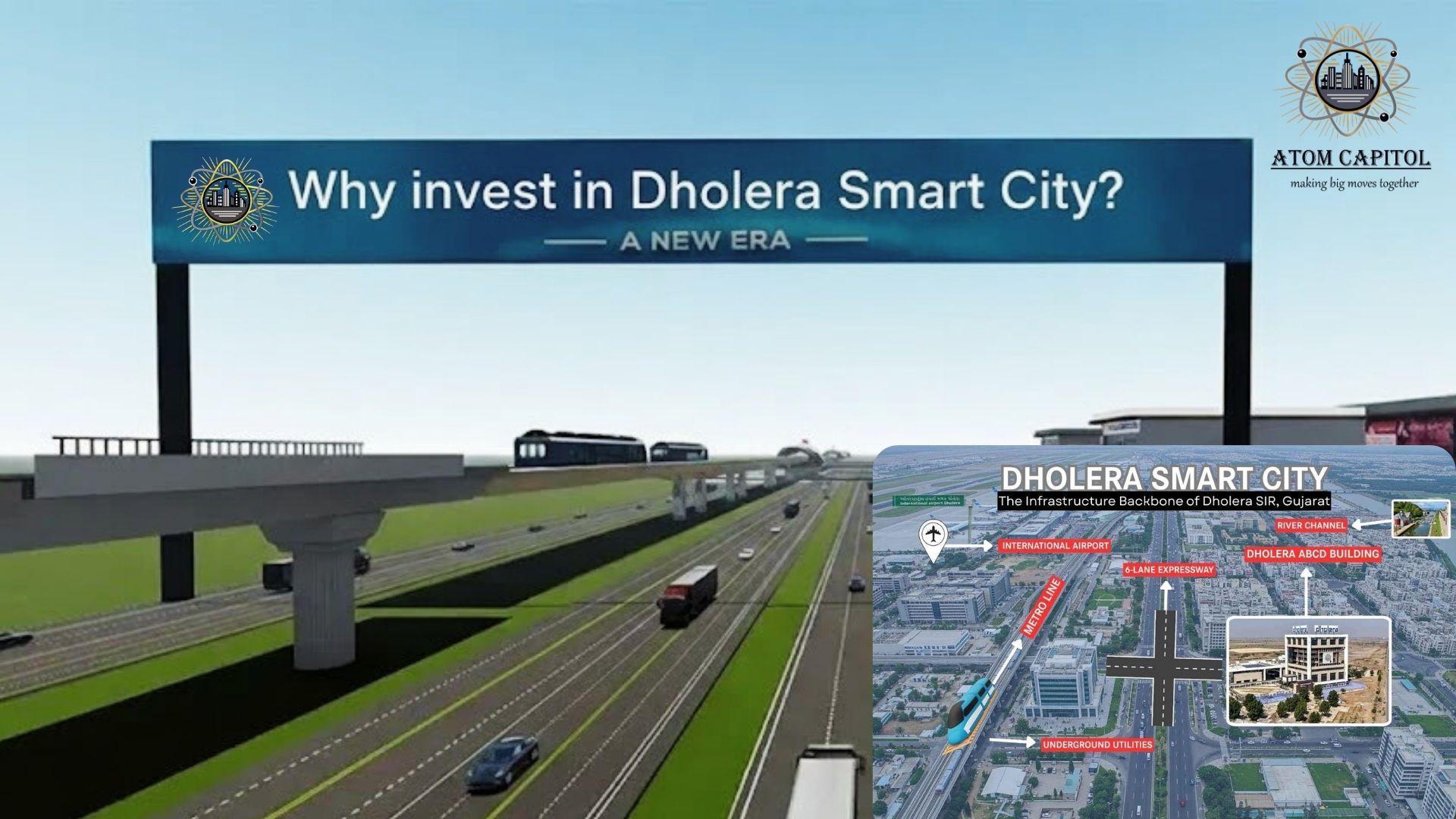
Key infrastructure already planned and under execution includes:
Ahmedabad–Dholera Expressway
Dholera International Airport
Underground power, water, and ICT corridors
Flood-resilient drainage and stormwater systems
📌 Infrastructure-first cities always outperform speculation-led cities in the long run.
Manufacturing-Led Urbanism: Why Invest in Dholera Smart City Where Demand Is Real
To truly understand why invest in Dholera Smart City, you must first understand how demand is created.
Dholera is manufacturing-first, not residential-first—a rare and powerful distinction.
Target sectors include:
Semiconductors & electronics
Renewable energy manufacturing
Chemicals & advanced materials
Engineering and heavy industry
Logistics and warehousing
This matters because why invest in Dholera Smart City is not based on hype, but on fundamentals:
Manufacturing creates permanent jobs, not seasonal demand
Jobs create sustained housing needs, not speculative spikes
Housing demand becomes end-user driven, not investor-driven
📌 Cities that grow on jobs grow steadily. Cities that grow on hype collapse cyclically.
This is a core reason why invest in Dholera Smart City makes long-term sense.
Government Backing: A Key Reason Why Invest in Dholera Smart City with Confidence
One of the biggest silent killers of real estate wealth is policy and execution uncertainty.
This is where why invest in Dholera Smart City becomes compelling.
Dholera significantly reduces uncertainty through:
Special Investment Region (SIR) status
A dedicated Dholera Development Authority
Continuous involvement of both Gujarat and Central Government
Special Purpose Vehicles (SPVs) focused only on Dholera’s execution
📌 When governments plan, fund, and monitor a project over decades, private investors benefit from stability and continuity—a major reason why invest in Dholera Smart City over speculative locations.
Strategic Location: Why Invest in Dholera Smart City for Long-Term Value
Another decisive factor in why invest in Dholera Smart City is geography.
Dholera’s location offers:
Proximity to Ahmedabad (Gujarat’s economic capital)
Alignment with DMIC freight and industrial corridors
Access to ports, expressways, rail, and future airport connectivity
This directly reduces:
Cost of production
Cost of logistics
Time to market
📌 Lower-cost ecosystems always attract industries—and industries attract long-term capital appreciation.
This structural advantage explains why invest in Dholera Smart City is a strategic decision, not a gamble.
Multiple Plot Categories, One Smart Strategy: Why Invest in Dholera Smart City Wisely
Dholera offers multiple investment formats:
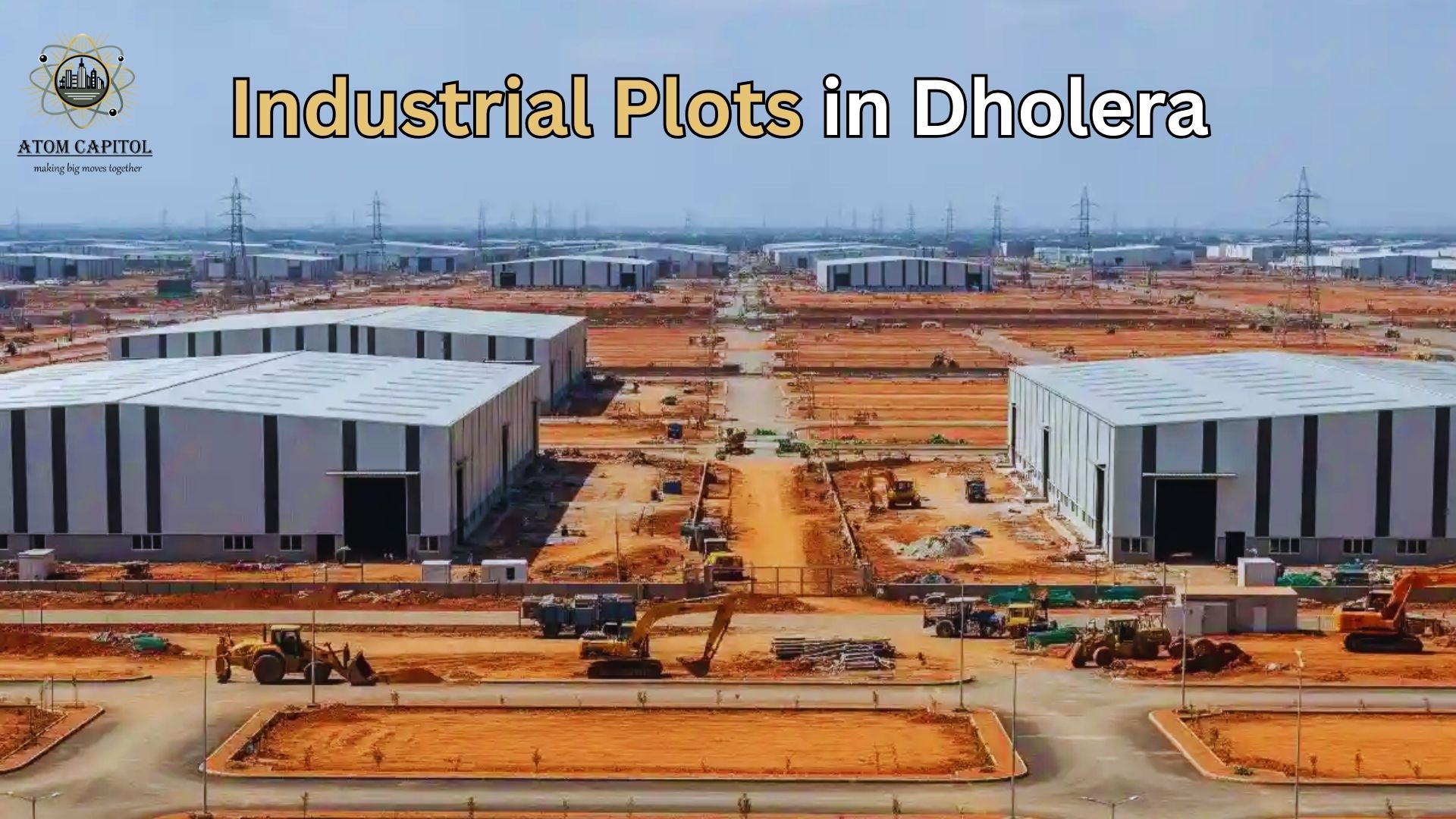
Industrial plots (high capital, large scale)
Commercial plots (business-led growth)
Residential plots (stable, long-term wealth creation)
For most individual investors, why invest in Dholera Smart City points toward residential plots, because they offer:
Easier entry
Lower volatility
Flexibility for self-use or resale
This is why professionally planned residential projects matter more than random land parcels.
Projects such as The Aurelias by Atom Capitol stand out because they combine:
Clear residential zoning
Strategic proximity to activation corridors
Planned infrastructure
Clean and verifiable documentation
📌 In large planned cities, micro-location and execution matter more than city branding—a critical insight when evaluating why invest in Dholera Smart City.
Dholera Is in the “Re-Rating Zone” of Its Lifecycle
Every planned city goes through phases:
Vision & announcement
Infrastructure execution
Industrial activation
Residential absorption
Maturity
Dholera today sits between Phase 2 and early Phase 3.
This phase historically offers:
Maximum upside
Controlled risk
Infrastructure visibility without full price reflection
📌 Once a city becomes obvious, the extraordinary returns are already gone.
Cleaner Titles, Better Planning, Lower Legal Noise
Another overlooked advantage:
Pre-defined zoning
Planned TP schemes
Controlled land use
Centralized governance
Compared to legacy cities plagued by:
Title disputes
Unplanned colonies
Infrastructure retrofits
Dholera offers cleaner land mechanics, which improves resale confidence and long-term liquidity.
Dholera Aligns with India’s 20-Year Macro Trends
India’s next two decades will be shaped by:
Manufacturing expansion
Urban migration
Smart infrastructure
Sustainable cities
Dholera aligns with all four.
📌 Investing in Dholera is not a tactical move—it is a strategic alignment with India’s future direction.
Who Should Invest—and Who Shouldn’t
Ideal for:
✔ Long-term investors (5–10 years)
✔ Future home builders
✔ NRIs seeking structured Indian exposure
✔ Professionals diversifying assets
Not ideal for:
✖ Short-term traders
✖ Guaranteed-return seekers
✖ Impatient capital
Dholera rewards patience, clarity, and planning.
The Most Common Mistake Investors Make
The biggest mistake is asking:
“How fast will prices rise?”
The smarter question is:
“Will this city still matter after 20 years?”
Dholera is being designed so the answer remains yes—decades from now.
Final Perspective: Dholera Is an Investment in Systems, Not Sentiment
Dholera Smart City represents:
Infrastructure-led growth
Manufacturing-driven demand
Government-backed execution
Long-term urban intelligence
It is not built to excite today.
It is built to perform tomorrow.
The strongest real estate investments are not made where demand exists—but where demand is being deliberately created.
Dholera Smart City is one of those rare places.
Thinking of Investing in Dholera?
Choose locations and projects that respect:
Zoning clarity
Infrastructure proximity
Legal transparency
Long-term livability
When done right, Dholera is not just land ownership—it is participation in India’s next growth cycle.
Invest early. Invest wisely. Invest where the future is being engineered.
Dholera Smart City is driven by industrial development, government-backed infrastructure, and long-term planning, making it a fundamentals-based investment rather than a speculative market.
Dholera benefits from Special Investment Region (SIR) status, a dedicated development authority, and continuous Central and State Government involvement, reducing policy and execution risk.
As industries become operational, demand from professionals, engineers, workers, and service providers will naturally increase residential and rental demand.